
Why I Enjoy Old Gay Plays
A theatre fan comes out about his love for vintage LGBTQ characters
—
What does it mean to be gay?
I was the kid who secretly stayed up late to watch a midnight broadcast of Fortune and Men’s Eyes with the volume turned low. I was the pimply adolescent surreptitiously digging through the reject bins at Blockbuster Video looking for a used VHS copy of Norman…Is That You?. I was the young man whose mind was blown to find out that The Naked Civil Servant on PBS was based on a real story about a real human being. Growing up
Years later, when I went off to college on Long Island, I was surprised to find gay men popping up not just alongside me in the drama department but also in the curriculum. Here’s where my
Also tough to write off as strictly period pieces were Mart Crowley’s artfully bitchy The Boys in the Band (1968) and Williams’ poetically lonely Small Craft Warnings (1972). As someone who has spent more than his fair share of time stinking drunk in East Village gay dives, I’m all too well acquainted with similarly catty quips and sad monologues in unscripted form. I’m sure I’ve improvised a few variations of my own. But old queer
As for old gay love stories, they’ve proven much harder to find. Yet as early as the late ’50s, gay-friendly enlightenment had at least come into play. Last year, The Pearl Theatre’s lovely resurrection of Shelagh Delaney’s A Taste of Honey (1958) charmed the hell out of me with its warmly conceived portrait of a gay best friend. Meanwhile Phoenix Theatre Ensemble’s perversely enjoyable take on Joe Orton’s Entertaining Mr. Sloane (1964) this past spring was a deliciously wicked satire of closeted respectability.
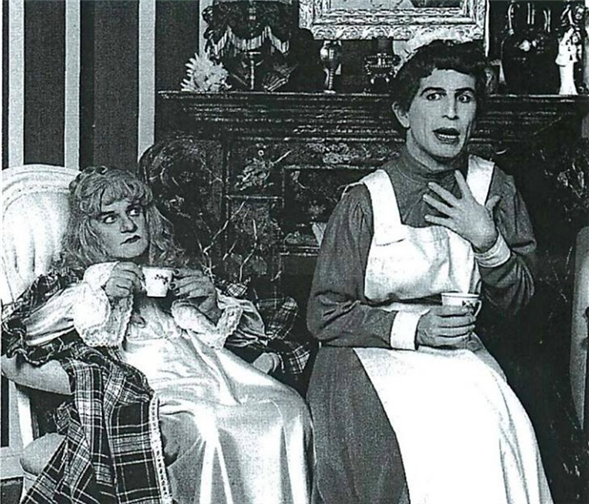
Luckily, by the time I was born in the mid-’60s, things had begun to change via Off-Off-Broadway. Although I wasn’t wheeled by perambulator to check out the groundbreaking work of Lanford Wilson, Terrence McNally, and Charles Ludlam, all of them were actively writing when I first discovered them as a young adult. (McNally still is!) Because of that, I consider them a part of my lived history. Indeed, as luck would have it, I was fortunate enough to catch Ludlam himself in the original production of Irma Vep (1984). That was without a doubt one of the greatest performances I’ve ever seen as Ludlam seemed to have the ability to make an audience react on cue: laugh, stop, laugh, stop, groan, stop. Yet his brilliant farce has never been simply comic to me. Its send-up of gender stereotypes runs counter to the roles today’s retro fascists want to reassign. Irma Vep is clownery of the most revolutionary sort. And with a respectful nod to theatre’s past, I know what “camp” I’m in.
—
Drew Pisarra‘s theatre experiences range from ventriloquist (Singularly Grotesque) to librettist (The World Is Round), choreographer (Ladies’ Voices) to master of ceremonies (White Wines). Follow him on Twitter at @mistermysterio. Follow TDF at @TDFNYC.
Top image: Charles Ludlam and Everett Quinton in Irma Vep.
TDF MEMBERS: Browse our discounted tickets to theatre, dance, and concerts.