
She Danced for Fosse, Now She’s Updating Him
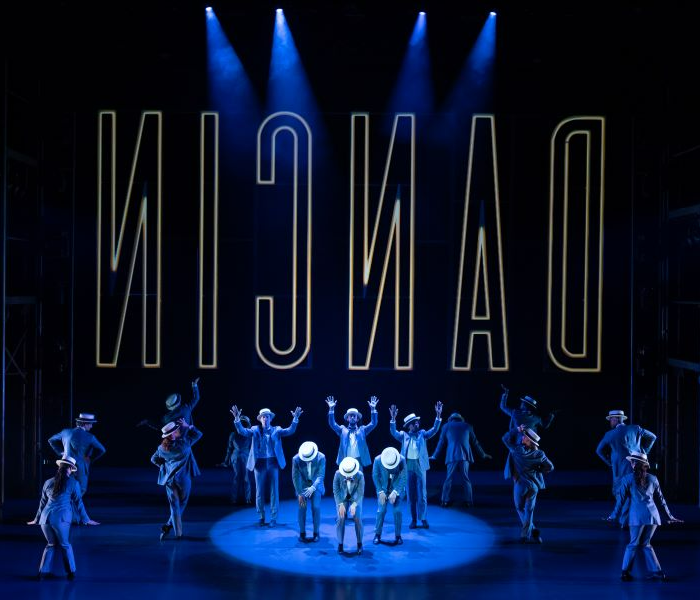
After performing in the original production, Kirsten Childs returns to Bob Fosse’s Dancin’ in a new role: writer
—
When Kirsten Childs met Bob Fosse at her very first musical theatre audition, she had no clue who he was. “I didn’t know doodly-squat about musical theatre back then,” she says, laughing. It was the late 1970s and she was a modern dancer from California. She heard about an open call for a Broadway tour and, even though that wasn’t her scene, she decided to attend.
“I had to sing my song to the director-choreographer,” Childs recalls. “I was just having a good old time, singing to this guy and flirting with him and carrying on. He clearly knew that I had no idea who he was, and it was making him chuckle.”
Fosse was so impressed and charmed, he cast Childs in the first national tour of Chicago. Eventually, she took over the role of Velma Kelly, becoming the first Black performer to play the part.
That was Childs’ entrée into the world of musical theatre, but while she started out a performer, she ended up a creator. After making her Broadway debut in Bob Fosse’s Dancin’ and appearing in Jerry’s Girls and Sweet Charity, she transitioned to writing her own musicals, including the Obie-winning The Bubbly Black Girl Sheds Her Chameleon Skin and the rollicking fable Bella: An American Tall Tale. Now, in a full-circle moment, she has returned to Dancin’ for another Broadway debut, this time as a writer. As the text consultant for the buzzy revival of Fosse’s beloved dance spectacle that started out at San Diego’s Old Globe and has now transferred to Broadway’s Music Box Theatre, Childs is tasked with making the show work for contemporary audiences. As she explains: “I want to maintain the integrity of what Fosse was trying to do book-wise, but also be sensitive to the zeitgeist at this moment.”
Described as an “almost plotless musical,” the show is a series of self-contained dance vignettes set to a wide variety of music (Louis Prima, Harry Warren and Johnny Mercer, Leiber and Stoller, classical) complemented by dialogue. When revisiting and revising the sequences, Childs drew on her dance background, her collaborations with Fosse and her skills as a writer of musicals.
“I learned Fosse movement firsthand from Fosse,” she says, recalling his instructions to “keep that tension in your hands; make sure you’ve turned in your knees precisely.” But Childs stresses that Fosse wasn’t just a choreographic taskmaster, he was a gifted storyteller.
She remembers how Fosse characterized the choreography for “All That Jazz” as a story of “foreplay to orgasm,” and she appreciated how he imbued every step with meaning. “One movement moved into the next movement into the next movement, seamlessly and purposefully,” she recalls.
When she was hired as a swing for the original Broadway production of Dancin’, she watched the show from the house to learn all the moves. Childs recalls how the dancers “expressed Fosse style with such grace and beauty and strength.” She feels it’s important to share that original style and intent with audiences at the revival, giving them a sense of “what Fosse was, how Fosse conceptualized the show.”
Childs has experience infusing the past into her present work—she wrote an entire semi-autobiographical musical, Bubbly Black Girl, in which she grappled with aspects of her younger self. But bringing Dancin’ into the 21st century has been more challenging than she anticipated. To update the text, she worked closely with her old friend, director Wayne Cilento, a fellow Fosse vet who earned a Tony nomination for his performance in the original production of Dancin’ and directed Childs in Jerry’s Girls on Broadway.
“I started to look at places where I felt that there did need to be something taken out from the old show,” Childs explains or, at times, “something added that would enhance what was said in the old show, but in a more acceptable way for today.”
One revamped scene that she is particularly proud of is her “spin” on the Dolly Parton standard “Here You Come Again.” In the original production, the concept was four women performing the song and realizing they were dating the same man. Even back then, that take gave Childs pause, and she knew it wouldn’t go over well today. But she wanted to keep the number.
“I thought, we’ll listen to the lyrics and we’ll actually respond in a 2023 way,” she says. In the overhauled scene, the performers begin to sing but then stop and start parsing the lyrics for anything potentially problematic. “It became fun to subvert that, which is, I think, faithful to Fosse, because Fosse loved to deal in subversion. So, that’s my homage to his sly, winky style.”
Childs also wants to highlight Fosse’s faith in and generosity toward his dancers—after all, he took a chance on her twice. “I have tried to amplify Fosse’s sense of loyalty, responsibility and appreciation for the dancers striving to give the clearest sense of his vision,” she says. She cites a new moment in the show, when a performer channeling Fosse’s spirit states, “I love dancers. And dancers love to dance.” To Childs, that line epitomizes Fosse.
With Fosse gone, Childs appreciates how thoughtfully Cilento is interpreting his moves for a new generation. “Let’s be honest, it can never be Fosse because Fosse’s not with us. And yet, it can be Fosse because this man knows his Fosse inside out,” she says. “There’s an alchemy in this particular tribute, because it’s Fosse through Cilento. And 15 years from now, it will be someone else. And that’s as it should be.”
In addition to her work as a theatre-maker, Childs is also a theatre educator. She’s a professor in NYU’s Graduate Musical Theatre Writing program (which, full disclosure, is where we met) and has been a mentor for TDF’s Wendy Wasserstein Project. So, as a teacher, she not only understands Fosse’s place in musical theatre history, but she also grasps the importance of keeping his legacy alive for future artists and audiences.
“When you take students to the theatre, their minds are so lively,” Childs says. “I’ll always be grateful to being around young people who are so smart and so engaged, learning about the world through theatre and interacting with each other—and with their mentors—in an unafraid, brilliant, life-affirming way.” She’s excited to see how students respond to Dancin’. Perhaps Fosse will be their gateway to a lifelong love of musical theatre, just like he was for her.
—
TDF MEMBERS: At press time, discount tickets were available for Bob Fosse’s Dancin’. The show is also frequently available at our TKTS Discount Booths.
Top image: Bob Fosse’s Dancin’ on Broadway. Photo by Julieta Cervantes.