
How Audiences Can Help Broadway Become More Diverse
Theatre-makers can’t dismantle white supremacy in the industry without your assistance
Imagine if hundreds of tour groups wrote to theatre marketers and explained they were foregoing their annual visit to Broadway because they were offended by the lack of diversity on and backstage. Instead, they planned to hit up the Apollo in Harlem, Brooklyn’s Billie Holiday Theatre or another Black-led institution in the city. The financial hit would compel change. Boycotting has power, and that’s why Black creatives aren’t just marching in the streets against systemic racism, we’re protesting within the industry we love and work in, demanding it live up to its promise of equity and inclusion.
Nine years ago, I remember an activist telling me that when he attended Broadway productions with all-white casts, he would loudly remark, “Why is everyone onstage white?” Almost a decade later, the question is just as pressing. The most recent Ethnic Representation on New York City Stages report by the Asian American Performers Action Coalition revealed that 86.8% of the shows were written by white playwrights, 87.1% of the directors were white and 66.8% of the actors were white.
Now, due to the ongoing global protests sparked by the murder of George Floyd (yes, they’re still going!), there’s a massive chorus of Black (and other) voices asking, “Why is everyone on and backstage white?”
And we’re going to keep on asking.
Diversity in theatre isn’t just a win for artists of color; it offers audiences richer experiences. If theatre really wants to hold a mirror up to society, it must present more than just white-centered stories. Even when you see Black bodies on stage, the Black perspective is often erased because there are so few people of color making major creative decisions.
That’s why Black theatre artists have suffered so much abuse in silence, from ignorant microaggressions to out–and-out racism. But over the past six weeks, we’ve been talking, flooding social media with tales that would have probably meant career suicide just a few months ago. This isn’t a trend; this is a demand. The marginalization of Black Lives is over, in the street, in society and on the stage.
So, what will it take to diversify the theatre and dismantle white supremacy in the industry? Holding predominantly white institutions and theatres and producers and directors and other decision makers accountable. And that’s exactly what Black artists are doing while also starting their own initiatives to raise up their peers.
“I can’t be out on the streets with my three-month-old, but I can sit on my computer and call people in power to do something besides tweet empty PR stunts,” says Janice Rosario, a dance-maker and teacher at The Ailey School. Rosario has called on the CEO of her NYC apartment complex to provide mentorship programs for youth living in the nearby lower-income housing development. It’s not shouting “No justice, no peace” or chaining oneself to a gate, but digital activism still has an impact. Social media pressure is the reason why so many theatres all over the city started opening their lobbies and bathrooms to protesters.
Donja R. Love, an award-winning Afro-queer playwright living with HIV, says people kept asking how they could help. So he sent out tweets soliciting donations via Venmo, and turned around and gave the money to Black trans women “on a no-questions-asked” basis. Imagine if arts-funding organizations operated the same way, offering incentives to companies that presented shows written, directed and performed by BIPOC (Black, Indigenous and people of color) creatives? That would be an effective way to force the industry to stop prioritizing white-made work.
But that’s only part of the solution. White people in theatre need to do the work of dismantling racism in the industry, and that means necessary uncomfortable discussions followed by action. Gregory King, an assistant professor of dance at Kent State University who performed on Broadway in The Lion King, believes these conversations can happen between Black and white people, but only after both sides have acknowledged that “we exist on stolen land and are here because of the forced labor of enslaved Africans.” White theatre leaders need to look at their complicity in anti-Blackness and confront their implicit biases. And as more people of color are hired, especially in positions of power, the default to white artists will evaporate.
Of course audiences have a huge part to play in this revolution, too. Money talks, and theatregoers need to consider what they’re saying when they spend theirs. Do you want to watch more of the same, or something that offers you a new way to see the world that breaks the mold of the Great White Way? When Broadway reopens, will you be buying tickets to Dustin Hoffman starring in yet another revival of Our Town? Or will you choose to support Black-made work such as Michael R. Jackson’s Broadway-aimed Pulitzer Prize winner A Strange Loop or Roundabout Theatre Company’s recently announced mounting of Trouble in Mind, Alice Childress’ groundbreaking 1955 play within a play about racism in the theatre? At these prices, I hope we all want something other than the familiar.
Protesting white supremacy isn’t just about marching against police brutality, or demanding equitable funding for education and social services, or spending money at Black-owned businesses. It’s also about supporting theatre made by diverse creatives because Black Art Matters.
—
A dancer, teacher and playwright, Juan Michael Porter II has contributed articles to Observer, TheBody, American Theatre, Time Out New York, Electric Literature, BroadwayWorld and HuffPost. Follow him at @juanmichaelii. Follow TDF at @ TDFNYC.
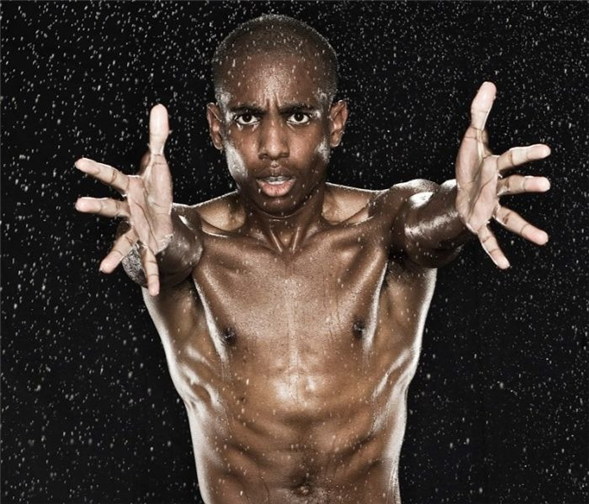
Top image: The author. Photo by Todd Williams.