
All About the EVE Project

Why the Martha Graham Dance Company is debuting new works by women during its two-week Joyce run
—
Since so many Martha Graham works feature heroines confronting crises or indulging their passions, the dance-maker’s namesake company has long been known for showcasing strong women. But this season the troupe’s focus feels even more feminist because of The EVE Project, a two-year initiative to commission new pieces by female choreographers featuring powerful female roles in honor of the upcoming centennial of women winning the right to vote.
“I chose this theme in order to bring to the fore the fact that Martha revolutionized the way women were presented on stage, creating complex, nuanced female characters,” says Janet Eilber, the company’s artistic director and a former lead dancer who worked closely with Graham during the 1970s.
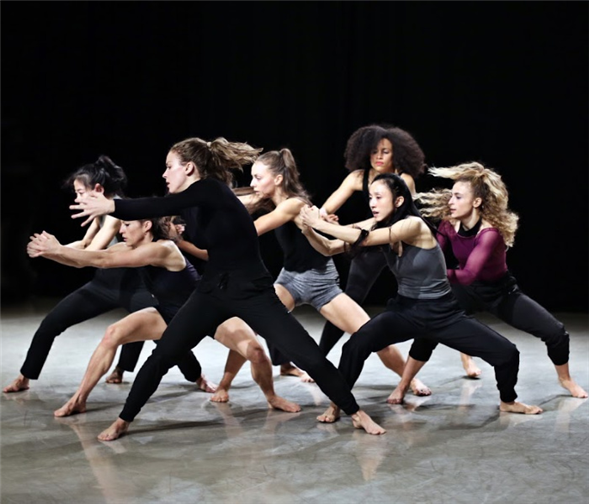
All of the pieces being presented in the Martha Graham Dance Company’s season at the Joyce Theater (April 2-14) were created by women. As part of the troupe’s ongoing effort to incorporate contemporary works that create a dialogue with the core Graham repertory, Eilber commissioned two premieres. Pam Tanowitz choreographed Untitled (Souvenir) set to two string quartets by Caroline Shaw; and Maxine Doyle and Bobbi Jene Smith collaborated on the all-female Deo, performed to an original score by experimental electronic musician Lesley Flanigan. “What we really want are works that frame and contrast, that, in effect, make people look at the Graham works in relief,” Eilber says.
Tanowitz tends to create coolly intellectual, highly contemporary works reminiscent of Merce Cunningham‘s style and technique, so the idea of her collaborating with Graham dancers is intriguing. “She has incorporated some movements from Graham, but they’re mixed with pure Pam movement,” explains Eilber. “The Graham moves actually get stripped of their emotional motivation and are really used as shapes. Our dancers are different in this piece than I’ve ever seen them.”
For Anne O’Donnell, who’s been with the company since 2014, tackling Tanowitz’s transformation of classic Graham moves has proved a welcome challenge. “These are steps that I know so well in my body, and to have her manipulate parts of that was a fun process,” O’Donnell says. “Pam’s language is quite beautiful and very specific and detailed. She doesn’t deal with the drama in those Graham pieces. So what does the same move look like if you take away the emotive physicality behind it?”
Eilber tapped Maxine Doyle, the associate director and choreographer for Punchdrunk’s long-running immersive hit Sleep No More, because she “wanted something with emotional content, which she’s very adept at.” Doyle is the one who brought in Bobbi Jene Smith, a former Batsheva Dance Company member and current teacher of the distinctive Israeli Gaga technique. Their premiere, Deo, explores ideas and issues drawn from the Ancient Greek myth of Demeter and Persephone, though it’s not a reenactment. “They just borrowed the myth for inspiration about mothers and daughters, basically the role of women in the cycle of mortality.” Eilber says.
O’Donnell also performs in Deo, and she found that the two choreographers complemented each other. “Each one brought different expertise,” she says. “Maxine brought a lot of history to it, with writings about the myth, and resources like images and texts. Meanwhile, Bobbi Jene is such a physical artist. She was in there sweating with us. She brought an element that was very raw.”
The rest of Joyce season includes many staples by Graham from the 1930s and 1940s, as well as a revival of her lesser-known Secular Games from 1962. It was last performed while Eilber was still dancing in the company, and she recalls it featuring “a lot of energy, a lot of jumping and lifting. It’s much more released than the heavy, dramatic works that Martha is famous for. It’s about the antics of young people falling in and out of love, playing the games that young people play. Martha makes fun of both men and women equally. The question was: Would it speak to today’s audience? I wanted to take the chance that it would, because she was touching on universal truths.” It’s also one of the rare moments when men will command the spotlight: On a few nights, its men’s section is actually being performed by itself on a separate program.
To read about a student’s experience at the Martha Graham Dance Company’s EVE Project, check out this post on TDF’s sister site SEEN.
—
TDF MEMBERS: At press time, discount tickets were available for the Martha Graham Dance Company. Go here to browse our current offers.
Susan Reiter regularly covers dance for TDF Stages.
Top image: The Martha Graham Dance Company rehearsing Maxine Doyle and Bobbi Jene Smith’s Deo. Photo by Melissa Sherwood.