
Addressing Theatre’s Gender Parity Problem

How Parity Productions is helping female creatives get ahead
—
Ludovica Villar-Hauser has been developing, directing and producing shows on both sides of the Atlantic for more than three decades. So she understands firsthand the challenges of being a female theatre-maker in an industry with an ingrained gender parity problem. The lack of women in off-stage creative roles (directors, writers, designers) isn’t just limited to Broadway. Last month, the League of Professional Theatre Women shared the findings from its third Women Count: Women Hired Off-Broadway, which covered approximately 700 Off-Broadway productions from 2010 to 2017. While the numbers of female creatives employed in various roles certainly fluctuated during that time, they never came close to 50%.
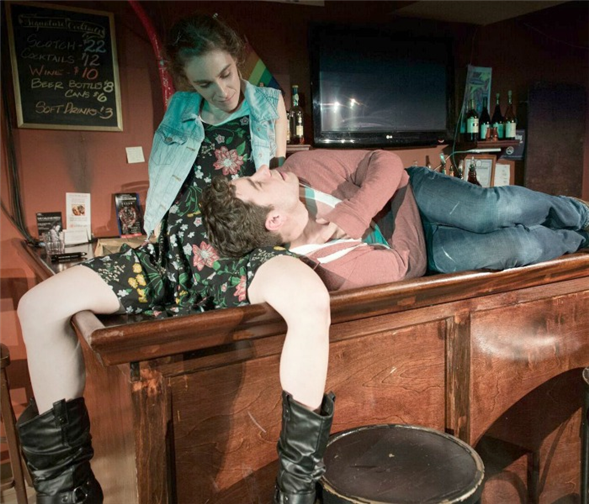
This ongoing gender imbalance is what inspired Villar-Hauser to found the nonprofit Parity Productions. “We’re a theatrical company, we develop new work, and we have a hiring practice of at least 50% women and/or transgender artists,” she explains. Parity’s current show, She Calls Me Firefly, a coproduction with New Perspectives Theatre Company, easily exceeds that target, with women in all major creative positions, including Villar-Hauser in the director’s chair. Its central character happens to be a man, but that’s just fine. Parity’s focus is on backstage creatives and this is the story that the female playwright, Teresa Lotz, wanted to tell.
Born and raised in London, Villar-Hauser became an impresario out of necessity in the ’80s when, at age 23, she so longed to direct Eugene O’Neill’s Long Day’s Journey Into Night that she self-produced it on the West End (a feat, she stresses, that would be impossible to replicate today). After coming to New York and running the now-closed Greenwich Street Theatre for 17 years, she decided she wanted to concentrate on directing. There was just one problem: Despite her impressive résumé, none of the men in charge were interested in hiring her. “Hang on a minute — how do you get a job around here?” she remembers wondering. Suddenly she was acutely aware of the dearth of professional mentoring for female creatives in theatre. “Of course the chaps got it, but we didn’t.” So she founded Parity Productions, her answer to that old boys’ network.
Lotz was actually working as an administrator for Villar-Hauser when she handed her boss She Calls Me Firefly. “I remember Teresa asked, ‘Would you read my play? I’ve only written one,'” the director recalls. Villar-Hauser says she was immediately captivated by the “incredible story” of Ken, a troubled young man whose traumatic past may threaten his relationship with a loving boyfriend. From that first draft, through rewrites, multiple workshops and now a full production, Lotz and her script have benefited from the kind of support Villar-Hauser feels women in theatre have historically been denied. That’s a hole Parity Productions aims to help fill: Female and transgender playwrights are encouraged to submit scripts for production consideration and the organization also awards two commissions annually.
In addition to developing and mounting its own work, Parity Productions also promotes other shows that meet the 50% threshold for female and trans creative hires. It keeps an updated list of qualifying productions on its website and champions them on social media. Currently, only two Broadway shows make the cut: Waitress and the soon-to-open Straight White Men, which underlines the importance of Parity Productions’ advocacy. “The reason for doing all of this? To encourage people to change their hiring practices,” Villar-Hauser says. “If you come to me with 90% blokes, I’m not interested!”
—
TDF MEMBERS: At press time, discount tickets were available for She Calls Me Firefly. Go here to browse our current offers.
Regina Robbins is a writer, director, native New Yorker and Jeopardy! champion. She has worked with several NYC-based theatre companies and is currently a Core Company Member with Everyday Inferno Theatre.
Top image: Emily Batsford and Sean Hudock in She Calls Me Firefly. Photos by John Quilty.