
A Newbie’s Guide to Watching Dance
You’re already an expert. Yes. Really. You.
—
So you think you can’t understand dance? Feel panic at the prospect of enduring a dance performance, then being asked for your opinion afterwards? Sure you’ll be dumbfounded by this art form that stands impenetrable before you, mysterious or aloof or alienating?
Take heart. Concert dance might be new to you, but dance isn’t. Corny as this may sound, dance is all around you, inside you, integral to your evolutionary origins.
Dance is many things, but at heart it is human movement. The earliest of the arts, dance preceded language, and it is your first expression too – the movement of your limbs within the fluid of your mother’s womb. Rooted in humanity’s shift to verticality, to ambling on two feet, it is in your DNA, the very foundation of your ancestors’ migration and survival. You see, interpret, and respond to human movement each and every day. When you see a dance performance, that innate expertise can be more powerful than anything you “don’t know” about the work.
The pulsing flow of blood through your veins, arteries, capillaries. The repetitive rise and fall of your breath. This is the constant dance of life inside you that never stops, until it does.
Your autopilot progression through your morning routine. The gentle shift back and forth as you wait in line at your favorite café. The side-side shuffle on a crowded sidewalk. These rituals in motion are a kind of dance, too.
And then there’s the movement in the world around you. The bluster of leaves in the wind. The looping lap of water against docks. The positively choreographic flocking of birds united in flight.
Keep all this in mind as you plan your foray into the dance world. Think about the qualities of movement you find pleasing, the kind of art that draws you in. Read previews and features. Look at images. Search online for videos. Find something that moves you and follow your impulse.
Think about how much narrative you appreciate. Classical ballet is rich in storytelling, while contemporary dance is often more abstract, and the movement runs the gamut from pedestrian to virtuosic.
Curious about another culture? Metropolitan hubs host choreographers from around the world, and the U.S. is home to myriad traditions, many of which continue to evolve and combine in new ways. Dance can be your passport to another place, as well as to greater understanding of the place you call home.
Want to get out of the theatre? No longer confined to the concert stage, dance shows up in spaces as diverse as galleries, bridges, city streets, parks, airports. Museums often present dance programs alongside art exhibits. Restaurants pair dance and music with cuisine.
As you watch a performance, remember the movement inside and around you. Envision the boundary between you and the dancers dissolving. Sense the energy that connects you, that links us all in the larger dance of life.
Keep in mind that there’s also music, costumes, setting, lighting, the audience, the program notes. There’s time and space, the dancers’ and your place in it.
There’s what you ate before the show and how it settles or thrashes around your insides and what that does to your concentration, your ability to receive. The anticipation of the drink or meal you may get after, what happened that day, the laundry list of items to be accomplished in the upcoming weeks. These are all part of the experience. They are personalized tools you can use to explore what you’re watching.
Or you could approach the performance like a meditation—observe the fleeting thoughts that pass through your mind and let them go. Maybe this will allow something to rise to the surface. Maybe the dance will provoke memories, sensations, colors, and visions. It happens.
Better yet, why not enjoy being a novice viewer while it lasts? This is the sweet spot, after all. That short-lived period when you may well like everything you see. There is real joy to be found in this place – wonder and surprise. Consider yourself lucky to be here. Stay as long as you can.
—
An anthropologist and tango enthusiast, Carolyn Merritt recently wrote the book Tango Nuevo .
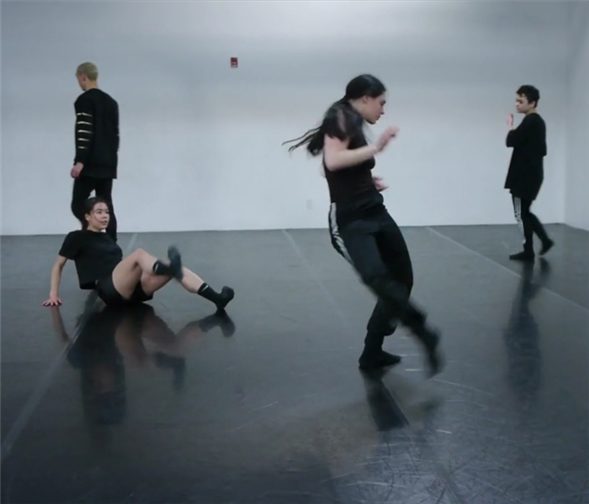
Top photo: An image from TDF’s short film about Sidra Bell Dance NYC. Watch all our dance films here.
TDF Members: Browse all our discounts for dance performances.