
A Major Playwright (That New Yorkers Hardly Know)
Playwrights
Regional theatres that produce new plays often plan their seasons by dipping into the same well of recent New York hits—a bit of
Venus in Fur
, a dollop of
Vanya and Sonia and Masha and Spike
, a healthy serving of
Clybourne Park
. However, there are still playwrights out there who enjoy thriving careers without much New York exposure. Some of them, in fact, are regularly produced for years without the city’s help, which means local audiences miss what the rest of the country gets to see.
That’s certainly the case with playwright James McLure, whose work is finally back in town after decades of playing everywhere else.
“James had a love for all of his characters and all of their flaws,” says director Cynthia Hestand. “He’s definitely interested in rebel types, people who like to get wild.”
Hestand has a long association with the plays, having acted in a production of Laundry and Bourbon years ago, but she gained a far greater appreciation when she directed these two works for Contemporary Theatre of Dallas in 2004 and 2006. By the time the second run came around, McLure had caught wind of the productions, and he gave Hestand a call.

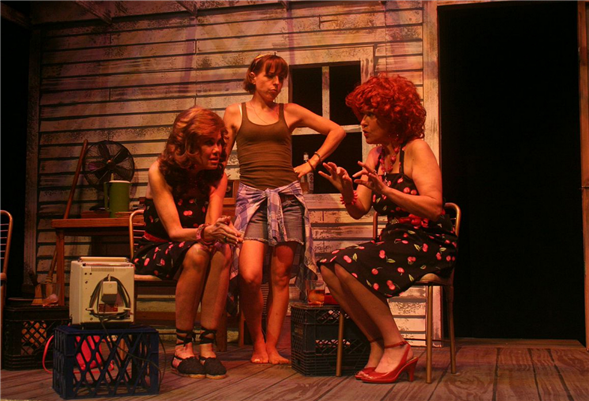
A scene from Laundry and Bourbon
“We had a series of phone conversations over the course of rehearsals,” she says. “He was not in good health and wasn’t able to come see it, unfortunately. But it definitely changed the way I see the play.”
One result of these conversations was a shift in tone, particularly inLone Star, in which a man named Roy returns home from Vietnam in severely diminished circumstances, much to the confusion and dismay of two younger men who used to idolize him. (Roy’s long-suffering wife Elizabeth appears in Laundry and Bourbon, along with one of the other men’s wives.)
“We played it much more for the comedy the first time,” Hestand says. “And while it’s still very funny, what he told me convinced us to make the play a bit darker. He wanted Roy and Elizabeth to represent the popular high school couple that should have ended up in a happy middle-class life. And the war put an end to that.”
—
Eric Grode is a freelance arts writer and a professor at Syracuse University’s Goldring Arts Journalism Program
Photos by Julie Ann Arbiter
ERIC GRODE